A new category of visitor attraction
Life,
and art.
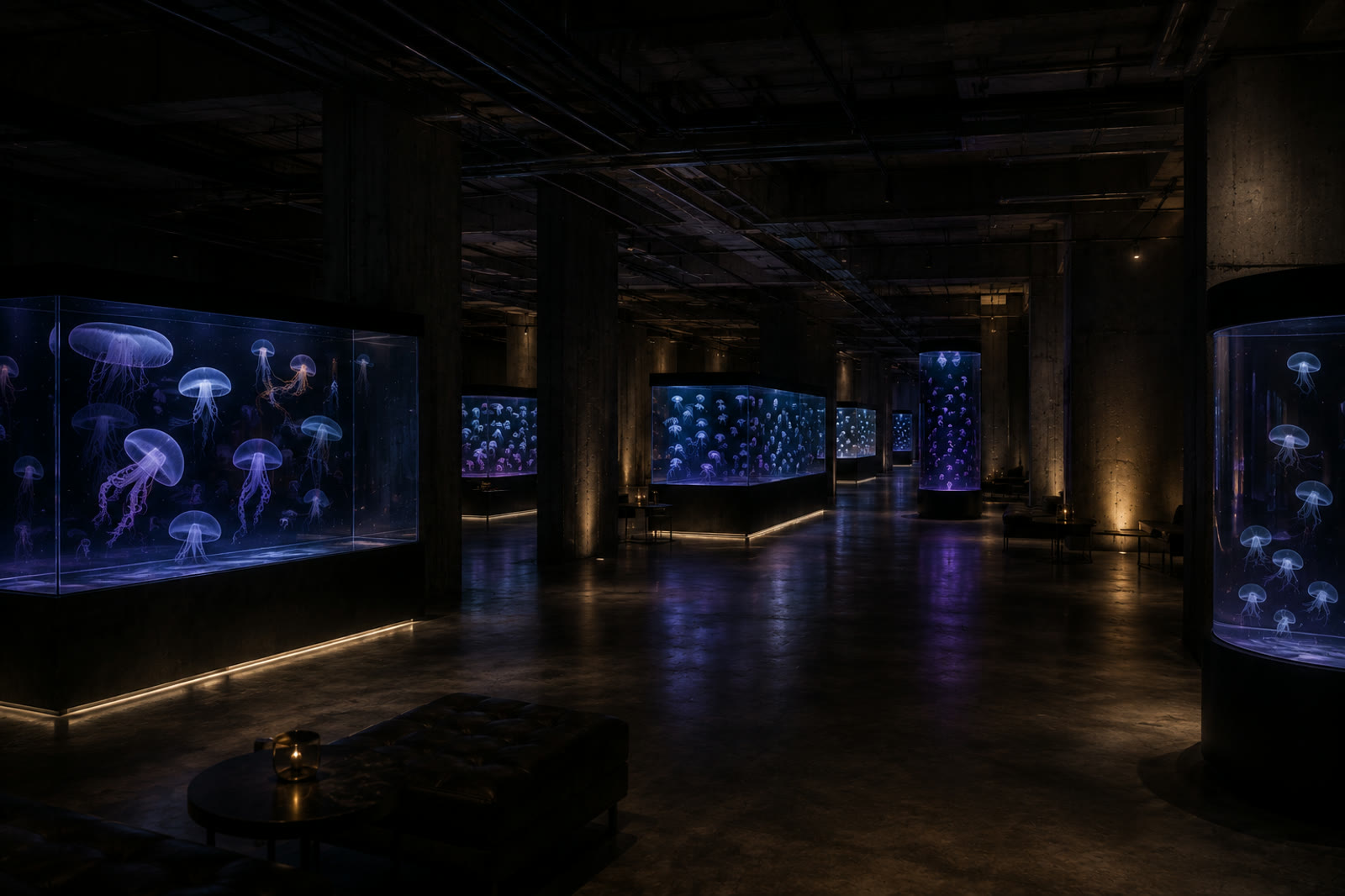
A living exhibition of jellyfish, light and architecture.
Part gallery. Part aquarium. Part dream.
01Dive in
Traditional aquariums
have a cost problem.
Artful, immersive experiences have never been more popular. But the traditional aquarium, as loved and as captivating as it is, has quietly priced itself out of the future.
- Typical capital cost
- £0M
- Typical footprint
- 0 m²
- Concept to opening
- 0 yrs
- Specialist staffing
- 24/7
The demand hasn’t changed.
The economics have.
02A New Category
Not a smaller aquarium.
A different experience entirely.
- The awe and wonderof an aquarium
- The atmosphereof an art gallery
- The reputationof a world-class museum
- The designof an edgy art exhibition
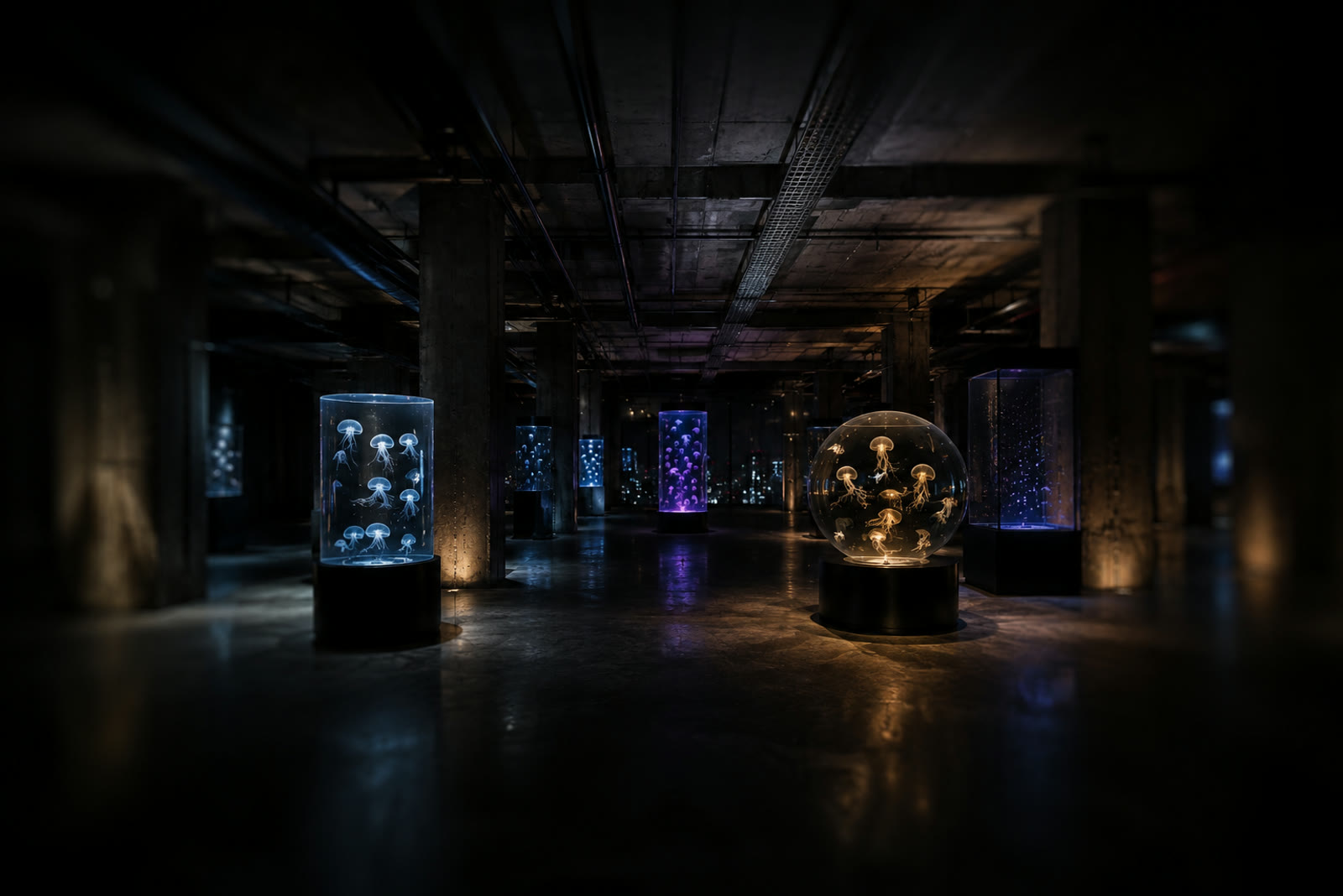
Exhibits composed like paintings. Biology presented as art. Conservation woven through everything. Research at its heart. A place people dress up to visit, and return to for evening events. A destination in its own right.
03Why Jellyfish
The perfect concept has existed
for 500 million years.
Beautiful. Timeless. Captivating.
- 0M
- years old: they floated long before the first trees
- 0%
- water: an animal made almost entirely of the ocean by mass
- 0
- bones, brain or muscle: pure, continuous, hypnotic movement
04The Visitor Experience
Spend an hour
in another world.
No laminated signage. No garish TV screens. A single, choreographed visitor journey, designed like a piece of music.
-
I
Arrival
A threshold, not a ticket hall. The light falls away behind you; the city stays outside.
-
II
Descent
A slow corridor of deepening blue. Your eyes adjust. Your pace slows without being asked to.
-
III
The Galleries
Rooms laid out like an art launch; exhibits designed like paintings. Each habitat is a single living artwork, framed in darkness.
-
IV
The Living Light
A central chamber where thousands of moon jellies surround you in exhibits. They drift to choreographed light and music. The room breathes.
-
V
Stillness
Somewhere to sit, to reflect, to take it all in. No narration. No hurry. This is what people come back for.
-
VI
Return
You surface calmer than you arrived, more at peace. You tell your friends, your family, and you bring them back.
05The Investment Case
The economics of an art gallery.
The draw of an aquarium.
Capital cost
Traditional · £8M
Aurelia
×5.3
Footprint
Traditional · 2,000m²
Aurelia
×4
Time to open
Traditional · 2 years
Aurelia
×4
Energy & operations
Traditional · full marine plant
Aurelia
×3
The raise
£1.5M funds the first site. In full.
06Flexible Locations
Deployed in
high-traffic destinations.
No coastline required. No custom-designed building. Aurelia fits into existing buildings and transforms them, adapting to the size and shape of the space with ease.
Aurelia
Airports
Hotels & resorts
Museums & cultural quarters
Mixed-use developments
Waterfront regeneration
City centres
Cruise terminals
Shopping centres
Tourist destinations
07In Partnership
Aurelia reefLIVE
Built on proven life-support technology, husbandry expertise, and attraction operations.
08The Team
Built by people
who’ve done this before.
-
01
David Mace
Co-founder
Founder of SEA LIFE Centres. He opened the first, then grew the group across Europe into 25 attractions. Non-executive director of Center Parcs, Go Ape and Haulfryn, and a trustee of Jersey Zoo. A marine biologist by training.
-
02
Keith Thomas
Co-founder
Development Director through SEA LIFE’s European rollout, alongside David. Co-founded the consultancy Petersham Group in 2003, and has delivered projects worldwide, from theme parks to aquariums. A biologist by training.
-
03
Joe Lavery
Co-founder
Takes aquarium projects from concept to construction: species sourcing, licensing and animal welfare. Senior SEA LIFE roles worldwide, and a non-executive director of the National Marine Aquarium. A marine biologist by training.
09Vision
One star attraction.
Then a constellation.
Rotating exhibitions
New species, new light, new reasons to return.
Technology layers
Responsive light and sound that make each visit unrepeatable.
Education
A generation meeting marine science somewhere unforgettable.
Conservation and research
Research and breeding programmes behind every wall.
The first site proves the model.
And that’s only the beginning.